
Show summary Hide summary
- How a New York party turned threatening, according to the producer
- Who was at the gathering: radicals, celebrities and friction
- What “off the pig” meant and why it inflamed the room
- Lennon’s changing political relationships in 1970s New York
- Memories of the day Lennon was murdered
- On music: honesty, simplicity and connection
- Key points from Douglas’s account
Jack Douglas, the longtime producer and friend of John Lennon, has shared a vivid memory that casts the former Beatle in an unexpectedly volatile moment. On a recent podcast, Douglas described a tense 1970s New York gathering where political rhetoric boiled over, and Lennon reacted in a way few fans have heard about. The recollection raises new questions about the company Lennon kept and the pressures around his activism in that era.
How a New York party turned threatening, according to the producer
Douglas recounted the episode while speaking with Billy Corgan on a music-focused podcast. He said he and Lennon attended a small, rowdy meeting of counterculture figures in the early 1970s.
Hilary Swank’s husband Philip Schneider: inside the businessman behind the star
Polska pregnant and betrayed by a close friend: she is very, very shocked
Those present included well-known activists and agitators who pushed a confrontational message. Douglas said the conversation in Lennon’s apartment became loud and aggressive.
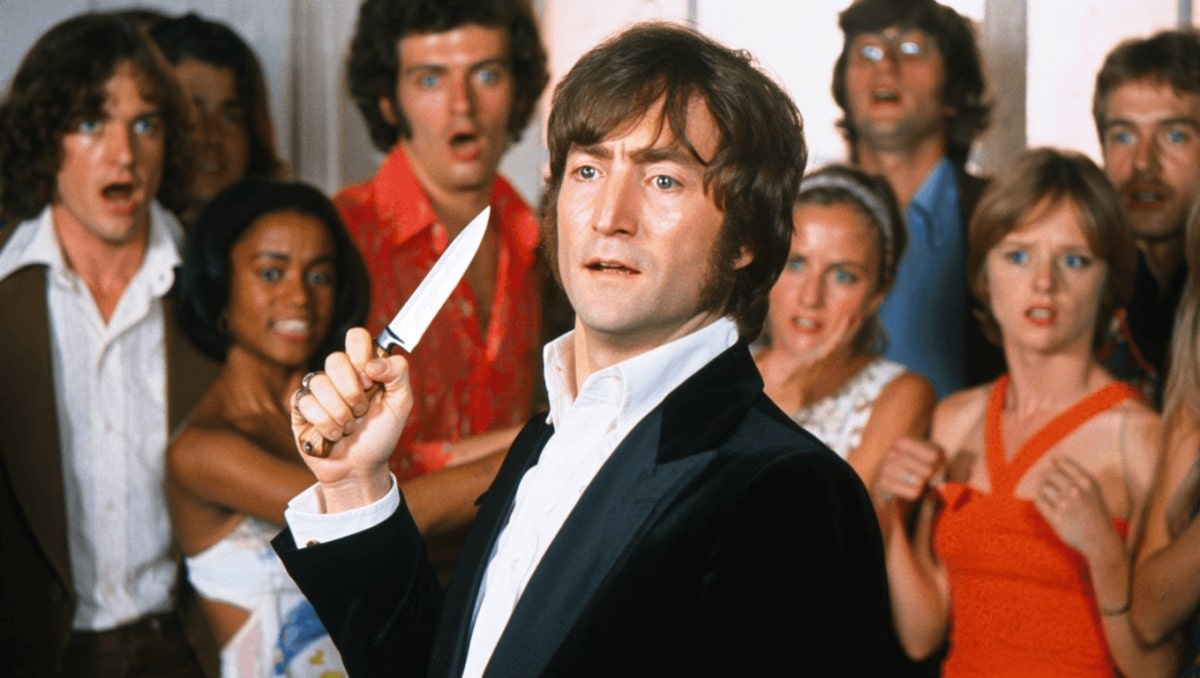
Frustrated, Douglas says Lennon moved into the kitchen and brandished a knife. The producer maintains the gesture was intended to quiet a woman who was loudly calling for violence against police. Douglas described Lennon’s action as a scare tactic that worked.
Who was at the gathering: radicals, celebrities and friction
The party brought together activists closely aligned with the anti-war movement and other radical causes.
- Abbie Hoffman and Jerry Rubin were part of the scene around Lennon and his wife, Yoko Ono.
- Douglas said some of these figures recruited Lennon for rallies and public events.
- He later suggested Lennon felt used by certain members of the group.
Douglas recalls Lennon privately referring to some attendees as eccentric or extreme. The producer said Lennon’s patience frayed when slogans and talk of violence dominated the night.
What “off the pig” meant and why it inflamed the room
The slogan shouted that night has a charged history. Activists in the era used the phrase to describe police with contempt.
“Off the pig” was shorthand in some activist circles for hostility toward law enforcement. For Lennon, who often spoke out against the Vietnam War and supported protest causes, the chant crossed a line when it turned to explicit calls for violence.
Lennon’s changing political relationships in 1970s New York
After relocating to New York with Yoko Ono, Lennon immersed himself in local activism. He spoke at rallies and lent his fame to causes, including a high-profile event for a poet and activist facing prison time.
But Douglas says some activists took advantage of Lennon’s celebrity. He described encounters where Lennon seemed to be used as a megaphone for other people’s agendas.
The cost of involvement: surveillance and legal pressure
Lennon’s activism attracted government attention. In the early 1970s, federal agencies monitored his activities and questioned his immigration status.
At one point, Lennon faced real threats of deportation amid efforts to curb his political influence. The surveillance reflected how seriously authorities viewed celebrity dissent.
Memories of the day Lennon was murdered
Douglas has also spoken about working with Lennon in the studio on the day the singer died. He described Lennon as upbeat and content.
Douglas remembers Lennon as happy at that time—excited about family life and new projects. He said Lennon seemed especially devoted to his young son and pleased with how life had settled in New York.
On music: honesty, simplicity and connection
Beyond the politics, Douglas shared reflections on Lennon’s creative approach. He recalled conversations about songwriting that emphasized directness and truth.
Douglas paraphrased Lennon’s idea that great songs come from honest experience and clear phrasing. That plainspoken craft is why many listeners felt an intimate bond with Lennon’s music.
Key points from Douglas’s account
- Douglas says Lennon once pulled a knife at a party to stop violent chants.
- The gathering included counterculture activists tied to the anti-war movement.
- Lennon and Yoko Ono were active with organizers like Abbie Hoffman and Jerry Rubin.
- Federal surveillance and immigration threats shadowed Lennon’s political life.
- On the day Lennon died, Douglas recalls him as optimistic and family-focused.










